


Morph Mastery: A Morphological Intervention for Reading, Spelling and Vocabulary
‘Morph Mastery uses recent research on the development of morphological knowledge to support structured and cumulative learning. The games are fun and adaptable, the learners are encouraged to develop independence through their “word espionage” and the materials are engaging for all ages.’
Professor Julia Carroll
What is morphology?
Morphology is the system of language by which words can be broken up into units of meaning, called morphemes. It differs from phonology, which breaks words up into units of sound. A morpheme is the term for any single unit of meaning. It is therefore by definition a root, prefix or suffix.

Prefixes are the units of meaning (morphemes) which are placed in front of a root. It is not a word in its own right.
A root is the purest unit of meaning within a word, once prefixes and suffixes are removed. It is the most basic form of a word and can be a word in its own right (but not always).
Suffixes are but units of meaning (morphemes) which are placed at the end of the word. It is not a word in its own right.
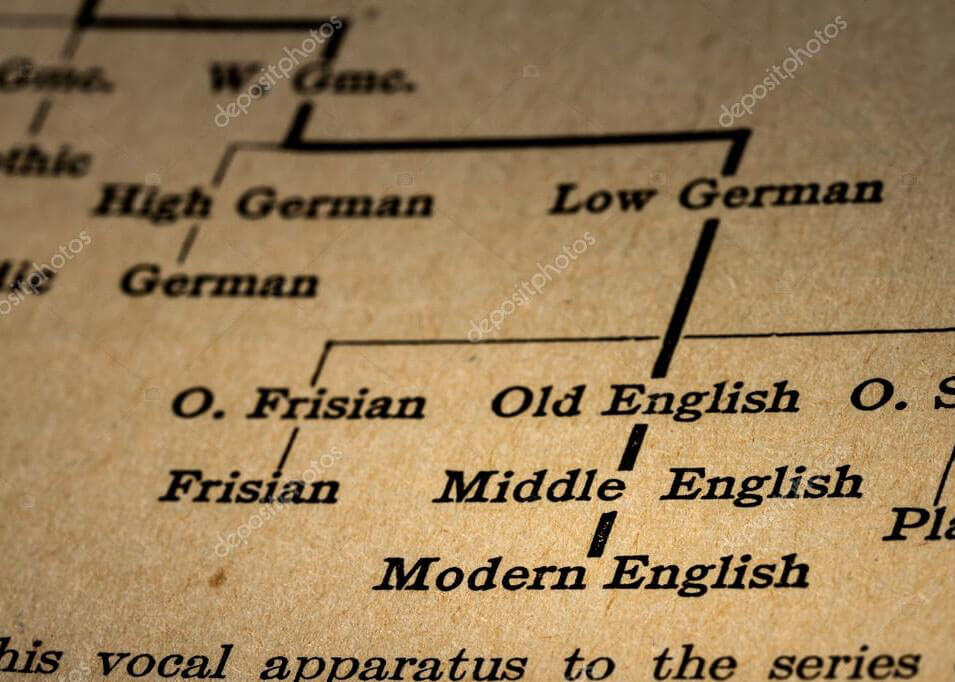
These are the basics. Once you start investigating morphemes and looking at layers of language, exciting connections between words can be made and layers of meaning added, as well as some very interesting conversations. There are three main layers of language:
Old English
The most basic and frequently used words in our language derive from Old English; for example say, when, come, that, play, look, grow, child.

Latin
The next layer of language usually derives from Latin; words we use regularly and with familiarity but words whose origin may not be fully understood by their users. For example, cent comes from the Latin word for hundred and is the root for many words; centipede, century, centimetre. Rupt means to tear and leads to rupture, interrupt, erupt, bankrupt.

Greek
The third layer of language is Greek, which involves more sophisticated language, often words at the highest level of vocabulary, linked to education, science, maths, and culture. For example pneu means air and leads to words like pneumatic and pneumonia. Micr means small and leads to words like microsope and microphone.
Why morphology?
Words make sense with morphology
Understanding the morphological rules in English, and using them to investigate words, helps to support both spelling, reading and vocabulary. Have a look at this TedEd video for an interesting explanation:
The Problem with Phonics
We know from research and experience that phonics works well for the teaching of reading and writing. However, sometimes, phonic rules don’t help, especially as children progress beyond the very early stages of literacy. Children with specific learning difficulties often find phonics very difficult, and many work better when they can make sense of words. In fact, most words’ spellings have evolved from their morphology, not their phonology.
foxes = f + o + x + i + z
foxes = fox + -es
shouted = sh + ou + t + i + d
shouted = shout + -ed
muzishoon m +u + z + i + sh + oo + n
music + -ian

Some exception words can be better explained by their morphological relationships
two
Morphology tells us that two is related to twins and twice so we can remember the tricky w
people
Morphology tells us that people is related to population so we can remember the tricky o
Research into morphology and learning
Research is increasingly showing us how important morphology is for learners of all abilities in reading and writing. We learn through research that a morphological approach is particularly effective for struggling readers and spellers. There are three reasons why this research should compel educators of learners with literacy difficulties into action:
1. Morphological awareness is highly influential when learning to read and write
We know that teaching morphology can support reading comprehension, vocabulary development, word reading ability and spelling. It is even thought by some researchers that morphological skills have a strong part to play in writing composition.
2. Morphological awareness can be trained
We already know that poor phonological awareness is often a major stumbling block for many children with reading difficulties, and that phonological awareness can be trained. This is the foundation of good quality teaching for learners with specific learning difficulty. New research tells us that morphological awareness can also be trained through intervention, and that this improves literacy skills.
3. Pupils with reading difficulties respond particularly well to morphological awareness training
It has been recently discovered through research that many poor readers have morphological awareness impairments. The conclusion is that reading difficulties often stem from weakness in some areas of language (and not just decoding and phonics difficulties). The same research found that while the cause of reading difficulties in children does not always stem from language weakness (in some cases early middle ear infections were the cause), a structured approach to morphological training is effective in all cases.
Further Reading
Law, J. M. and Ghesquière
Levesque, Breadmore & Deacon
Kathleen Rastle (2019)
Rastle et. al (2018)
Education Endowment Foundation
Julia Carroll & Helen Breadmore
- (2017), Morphological Processing in Children with Phonological Difficulties
- (2018), Not All Phonological Awareness Deficits Are Created Equal: Evidence From a Comparison Between Children With Otitis Media and Poor Readers
- (2018), Sublexical and syntactic processing during reading: evidence from eye movements of typically developing and dyslexic readers
Anna Cunningham & Julia Carroll (2012)
Deacon, Kieffer, & Laroche (2014)
Levesque, Kiefter, & Deacon, H (2017)
McCutchen et al (2014)
Tsesmeli & Seymour (2009)
Kirby et al (2012)
Apel, et al (2013
Bowers et al (2010)
Book: Improving Literacy by Teaching Morphemes by Nunes & Bryant
Morph Mastery: A Morphological Intervention for Reading, Spelling and Vocabulary
Morph Mastery is an accessible, practical guide designed for school practitioners and specialist teachers to support learners with specific learning difficulties (SpLD) with spelling, reading and vocabulary. The book provides everything you need to deliver Morph Mastery the intervention, but it can be used in a variety of other ways too:
- Packed with morphological games to play either in intervention (individual or group) or as a whole class
- Curriculum based assessments in reading and spelling based on the morphemes within the English National Curriculum
- Extensive word lists for planning, based on progression within the English National Curriculum
- Extensive word lists with meanings for Greek and Latin roots, prefixes and suffixes
- A morphological awareness assessment designed to support target setting and planning, as well as reading and spelling of morphemes
- Fun, engaging and multi-sensory ideas for teaching morphology in class
- Photocopiable and downloadable activity sheets and resources
Also available from other major booksellers
What is the Morph Mastery Intervention?
Morph Mastery is an evidence and research based intervention to support reading, spelling and vocabulary. It combines a morphological approach to words with what we know works for learners with specific learning difficulties; it is multi-sensory, structured, cumulative, with multiple built in opportunities for over-learning. Morph Mastery is most effective when delivered 1:1 but it can also be delivered in a small group. As an intervention it is designed for learners aged 9 -13 for whom phonics has failed or is no longer appropriate, but it can be used across the age ranges in different capacities, and adapted for older learners in intervention.
The intervention follows three colour coded ninja-like Morph Master characters; Prefa, Root and Sufa, who represent the three core components of morphology (prefixes, root words and suffixes) and use their sceptres to craft words.
Learners have fun with “word agility” games and “word mastery” investigations of words, as well as other interactive activities in three 30 minute lessons each week.
“Word espionage” takes place twice a week to support transference of learning into class, by finding and examining morphemes in texts used in class and also in the learners’ class-based writing. The intervention also supports transference of learning through a “Morph Mastercard” which is used both in intervention and class.
There are three core lesson plans which follow the same procedures and selection of games, so excessive planning is not required each week. These core lesson plans are personalised by the adult, based on termly assessments. Assessments are repeated to review progress and set new targets.
Morph Mastery: The Pilot Intervention
The intervention was piloted in 4 primary schools in Hertfordshire in 2019-2020. SENCOs and teaching assistants were trained, then approximately 12 weeks of intervention took place (brought to an abrupt end by Covid 19). All of the pupils were in Year 5 or 6 and two of them were taught together. Pupils were formally assessed, using standardised testing, before and six months after the start of the pilot.
The impact of the intervention on these pupils’ literacy was undeniable, in particular in reading comprehension. Statistical data, conditions of testing and analysis can be found in the book and here.
In spite of the disruption caused by Covid and sudden end to the pilot, teacher assessment showed that, during the term that the intervention was delivered:
%
pupils made accelerated progress in reading comprehension
%
pupils made accelerated progress in oral reading fluency
%
pupils made accelerated progress in spelling
%
pupils made accelerated progress in reading
%
pupils made accelerated progress in writing
%
pupils made accelerated progress in single word reading
Feedback from the intervention
“All the pupils were tuning in to words much more actively.”
“They really want to explore words, and sometimes wanted to discuss them over and over again!”
“We’ve been able to explore words in ways that we haven’t done before.”
“Morph Mastery has reignited our love of the English language.”
“I never expected such a clear, overt change. Just playing those games has really helped him to listen to the words and parts of words. Even when you’ve hit a word he doesn’t know he’s been able to think about the structure – he isn’t floundering like he used to, he has a tool to think about it. I could see in the sessions how much he was really getting into words.”
“It is a really interesting and a fun way of looking at words. I’ve realised that we don’t talk about spelling enough in school. We just give them a list of spellings. There is so much more meaning in words when you look at them this way. You aren’t just learning spellings by rote but making sense of them. I think they stick better because you are really zoning in.”
“One of the things that has surprised me is that the intervention has supported my learner to develop his vocabulary, not just his spellings. It’s bringing words to the fore that he wouldn’t usually use.”
“At first I was a bit frightened of using such a new approach, but now I really enjoy it. I am learning as well! We use the dictionary more, in looking things up, and thinking about what things mean.”
“I haven’t always considered how a word has been put together. I’ve learnt from it as well. I feel like it’s been a joint journey. It’s been really good to challenge my own thinking around words.”
“Morph Mastery has actually highlighted the gaps in all of the pupils’ vocabulary and grammatical knowledge as well as spelling.”
“Morph Mastery gave her a new spring in her step and both her reading and writing improved significantly.”
“She has absolutely flown in her writing since working with Morph Mastery.”
“The ability to form sentences in a much more effective way has improved dramatically.”
“She is much more confident and willing to “have a go” in class.”
“She brings her Morph Mastercard into class and really enjoys using it.”
“I feel like I’m learning more. The games help. I practise at home.”
“It’s good. I seem like I am doing better in classes. I like changing words. I can recognise which suffixes to put on. The games are fun.”
“I feel I understand it all better. I feel I can say what I mean.”
“I am better at spelling now because it has helped me to concentrate on the words. I understand my spellings better and know what to do. I understand words better now.”
“I love the handshake. I know what the real parts of the words are. It helps me to know what the root is because I know the real bit. I read more quickly and my reading is definitely better. It’s really fun.”
“I like it – it’s fun and enjoyable. I like the games especially the card games. I am better at spelling.”
“I love the games, especially the Spinner Games and Happy Families. I like the highlighting of words. It helps me with his work in class.”
“I really like the games. I’ve learnt new things about words. It’s helped me learn spelling rules. My writing is better and I can do more in class.”
OnDemand Courses
I run regular training events, webinars and live events as well as a growing collection of onDemand online courses. Please check back regularly or sign up to my mailing list using the form below to be notified of new events and courses.
Discover Morph Mastery – What is it and why does it matter?
Morph Mastery for Groups Intervention Training – 3 Sessions
Morph Mastery for Small Groups is a powerful new adaptation of the successful Morph Mastery 1:1 intervention – now reimagined to support small groups of learners aged 9 to 13 who are still struggling with spelling despite quality phonics teaching.
Morph Mastery for Groups Intervention Training
Morph Mastery for Small Groups is a powerful new adaptation of the successful Morph Mastery 1:1 intervention – now reimagined to support small groups of learners aged 9 to 13 who are still struggling with spelling despite quality phonics teaching.

Morph Mastery Lessons in Action
By popular demand, I am offering free access to films of complete Morph Mastery lessons. Meet the fantastic Phoebe, who is in Year 3 and at the very start of her Morph Mastery journey (week 3). Phoebe has a good grasp of phonics but struggles to apply this fluently in reading and spelling. She is loving the morphological approach!
Morph Mastery Intervention Training Course
This is an interactive, step by step course in delivering the intervention, including understanding the methodology and using the assessments to inform learning and track progress. There's 8 core sessions over 8 weeks with tasks in between, and by the end of the sessions you'll be up and running with the intervention.
